Category: AI Trends

  • AI in the Fitness Industry: The Future of Smart, Adaptive Workouts

    AI in the Fitness Industry: The Future of Smart, Adaptive Workouts

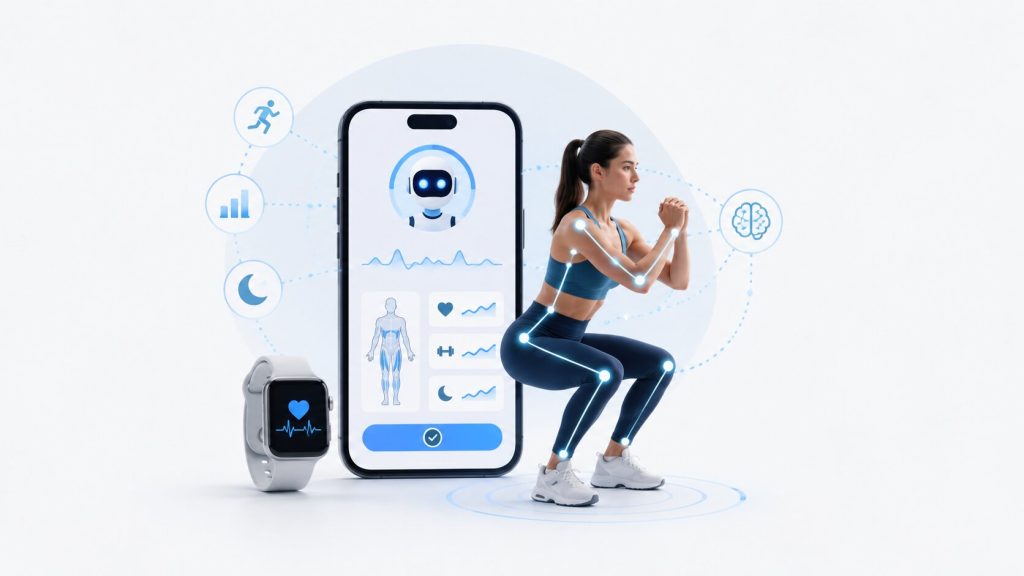
    Five years ago, “smart” fitness meant a watch that counted your steps. Today, it means an app that watches your squat form through your phone camera, flags a rounding lower back before it becomes an injury, and rewrites your entire training week because you slept four hours instead of eight.

    That shift didn’t happen by accident. AI in the fitness industry has moved from a marketing buzzword to the actual infrastructure behind personal training, gym operations, and nutrition coaching. For business owners, gym chains, and app founders watching this space, the question isn’t “should we adopt AI” anymore. It’s “how fast can we build it before a competitor does?”

    This blog breaks down what’s actually happening, backed by real market data, so you can make an informed call.

    Key Takeaways

    • The global AI in fitness industry is valued at USD 10.68 billion in 2025 and is projected to hit USD 57.80 billion by 2035, growing at a 19.3% CAGR — one of the fastest-growing niches in health tech.
    • AI-enabled fitness apps currently lead the market, ahead of wearables, smart gym equipment, and virtual trainers.
    • AI in fitness apps now goes beyond step-counting — think real-time form correction, injury prevention, and adaptive workout plans that change as your body changes.
    • North America leads adoption today, but corporate wellness and digital health platforms are pushing rapid growth across Asia-Pacific too.
    • The winners in this space won’t be “AI-only” apps. They’ll be human in the loop platforms where AI handles the data and trainers handle the relationship.

    Why Is AI in Fitness Growing So Fast?

    The numbers tell the story better than any hype cycle could. The global AI in fitness and wellness market was valued at USD 10.68 billion in 2025 and is expected to touch USD 57.80 billion by 2035, growing at a compound annual rate of 19.3%.

    That growth isn’t coming from one source. It’s a combination of:

    • Rising personalization demand: users no longer want generic 4-week plans; they want plans that adapt weekly.
    • Wearable technology maturing: smartwatches and trackers now feed continuous health data into AI models.
    • Corporate wellness programs: As per InsightAce Analytics, companies in North America are increasingly deploying AI in health and fitness initiatives to cut healthcare costs and boost employee productivity.
    • Post-pandemic digital fitness habits: people who moved to app-based training during COVID never fully went back, and AI made staying digital worth it.

    Market Breakdown at a Glance

    Segment Type Examples Market Position
    AI-Enabled Fitness Apps Personalized coaching, nutrition tracking Leading segment by revenue share
    AI-Integrated Wearables Smartwatches, fitness bands Strong secondary growth driver
    Virtual Personal Trainers AI-powered coaching platforms Fastest-growing category
    Smart Gym Equipment AI-connected machines Emerging, gym-chain focused

    If you’re a founder or decision-maker scoping an AI integration in fitness app project, this table matters. It tells you where the money and the user demand are actually concentrated. Apps still win. Hardware is a slower, capital-heavier bet.

    Where AI Is Actually Being Used Today?

    Let’s move past the market-report language and get practical. Here’s where AI in fitness apps is delivering real value right now.

    1. Real-Time Form Correction and Injury Prevention

    This is arguably the most impactful use case for everyday users. Computer-vision-based apps can now analyze a user’s movement through a phone camera and flag poor form in real time: a rounded back during a deadlift, a caving knee during a squat.

    Research backs this up: studies on AI exercise-coaching apps have shown measurable improvement in posture correction for movements like the squat and plank, even accounting for variation in individual body types. This isn’t a gimmick. It’s genuinely reducing injury risk for people training without a trainer physically present.

    2. Adaptive, Data-Driven Workout Plans

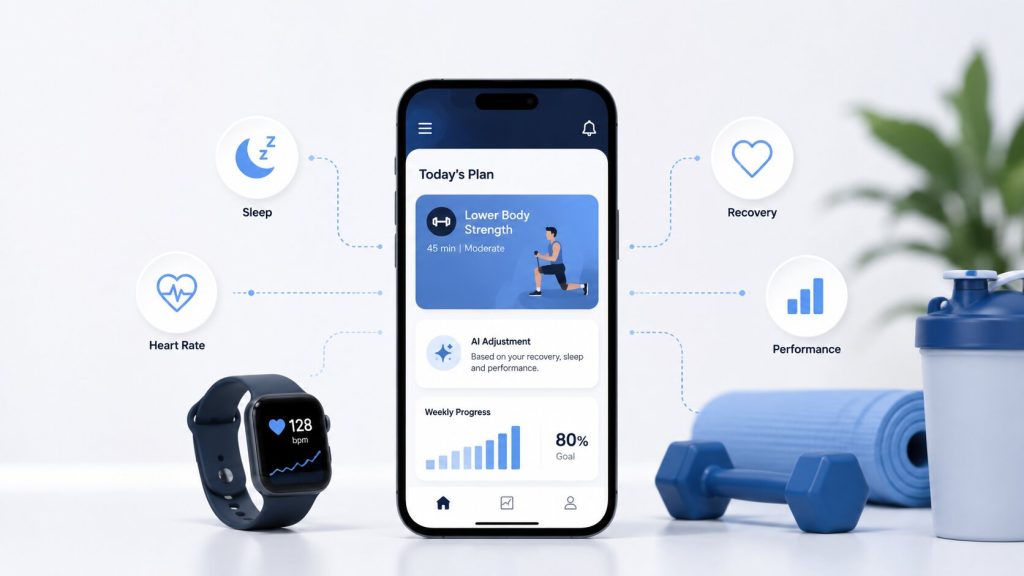
    The core promise of AI in fitness is adaptability. Instead of a static 8-week PDF plan, AI systems continuously analyze:

    • Sleep quality and recovery scores
    • Workout completion and consistency
    • Heart-rate variability and exertion levels
    • Stated goals versus actual progress

    And, adjust the next session accordingly. This is the difference between a plan and a system that responds to you.
    3. Smart Nutrition and Meal Planning

    Nutrition tracking tools now do more than log calories. Platforms are using AI to recommend meals based on dietary preferences, flag nutrient deficiencies, and suggest swaps that fit a user’s goals, pulling from massive restaurant and grocery databases to make logging nearly frictionless.

    4. Business-Side AI for Gyms and Trainers

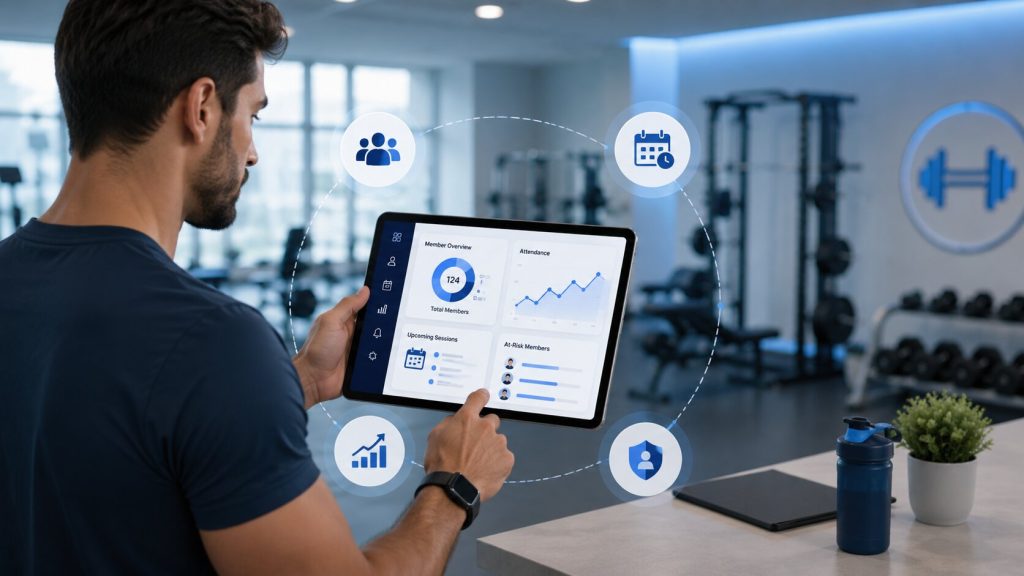
    This is the part most consumer articles skip, and the part business owners actually care about. AI isn’t just client-facing. It’s quietly reshaping fitness businesses from the back end:

    • Churn prediction: identifying clients likely to cancel or ghost sessions before it happens, so trainers can intervene early.
    • Automated scheduling and reminders: cutting admin time significantly.
    • AI-assisted marketing and content: generating first-draft blog posts, social captions, and outreach copy so trainers spend more time coaching and less time on a laptop.

    For gym owners and fitness-tech founders, this is where AI fitness industry transformation 2025 actually shows up on the P&L, not just in the app store.
    AI Trends in Fitness Industry: What’s Coming Next

    The AI trends in fitness industry for the next few years point toward three clear directions.

    1. Agentic, Autonomous Coaching

    Instead of static recommendations, expect AI “agents” that take action on your behalf, auto-adjusting your training calendar, rebooking a missed session, or negotiating rest days based on recovery data, without you opening the app.

    2. Wearable-to-Clinical Convergence

    Wearables are increasingly feeding data into healthcare-adjacent use cases — early injury detection, chronic condition monitoring, and post-rehab tracking — blurring the line between fitness apps and digital health tools.

    3. Hyper-Personalization at Scale

    As machine learning models get better at processing multi-variable data (sleep, stress, nutrition, training load), personalization moves from “customized templates” to genuinely unique programs per user, updated in near real time.

    Future of AI in the Fitness Industry: What It Means for Jobs

    This is the question every trainer, coach, and fitness professional actually asks, and it deserves a direct answer: AI is not replacing trainers.

    What AI does replace is the repetitive, data-heavy parts of the job: logging workouts, tracking macros, generating basic program templates. What it cannot replace is the human relationship: motivation, accountability, reading a client’s mood, and adjusting coaching style on the fly.

    For fitness professionals, this means the future of AI in the fitness industry (jobs) looks less like displacement and more like augmentation: trainers who use AI tools well will out-earn and out-scale trainers who don’t. For IT students and developers eyeing this space, it means opportunity: the fitness industry needs people who can build these AI layers, not just people who can train clients.

    Building an AI-First Fitness Product? What to Prioritize

    If you’re a business owner or founder evaluating AI integration in fitness app development, here’s a simple prioritization framework:

    1. Start with data infrastructure, not features. Your AI is only as good as the data pipeline feeding it. Wearable integrations, workout logs, and user feedback loops need to be solid first.
    2. Design for human-in-the-loop, not human-out-of-the-loop. The strongest products pair AI recommendations with human trainer oversight, especially for injury-prone movements.
    3. Prioritize retention features over acquisition gimmicks. Churn prediction and personalized re-engagement have a higher ROI than flashy onboarding.
    4. Build for privacy from day one. Health data is sensitive, and privacy and security concerns are a documented barrier to AI adoption in this market.
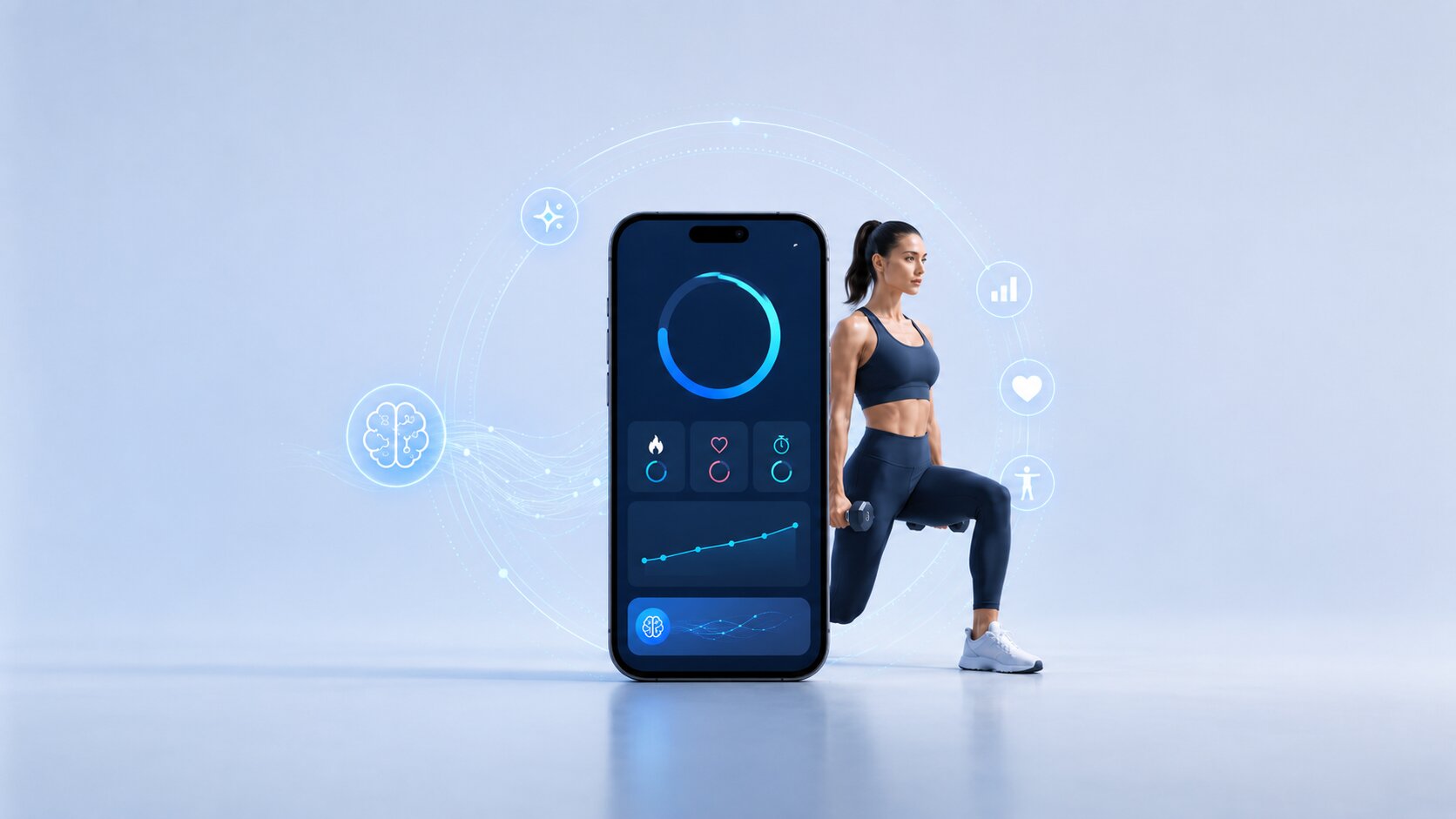
  • AI-Powered Personal Trainers: Transforming Fitness Apps in 2026

    AI-Powered Personal Trainers: Transforming Fitness Apps in 2026

    Picture this: it’s 6 AM, you have no time for a gym commute, and your usual trainer is booked out for a week. A decade ago, that meant skipping the workout entirely. In 2026, it means opening an app that talks you through every rep, counts your reps automatically, and adjusts the plan the moment you say your shoulder hurts.

    This shift isn’t hype anymore. It’s a real product category with real money behind it. The AI personal trainer market has moved past clunky workout generators into something that behaves like an actual coach, and business owners, app developers, and IT decision-makers building in this space need to understand exactly what’s driving that shift before they build their next product or pitch their next investor.

    Key Takeaways

    • The global AI in fitness and wellness market is projected to grow from $10.68 billion in 2025 to $57.80 billion by 2035, and this growth is being driven almost entirely by coaching apps, not just tracking apps.
    • A true AI personal trainer now means real-time voice coaching and mid-workout adaptation, not just a generated workout list.
    • Only 24.2% of US adults meet basic activity guidelines, which shows how big the personalization gap in fitness still is.
    • The best AI workout apps in 2026 win on decision quality during “bad days” — missed sessions, poor sleep, travel, and equipment changes — not on library size.
    • Business owners building fitness apps should design for a hybrid model: AI handles data and consistency, humans handle judgment and trust.

    What Is an AI Personal Trainer, Really?

    An AI personal trainer is not a workout generator with a chatbot bolted on. It is software that coaches you while you train, counting reps, adjusting difficulty, and responding to how your body feels in the moment.

    Most people still confuse two very different product categories. One type builds you a plan and leaves you alone once the workout starts. The other stays present through the entire session, the same way a real trainer would.

    This distinction matters for 2026 builders. Users increasingly search for an AI powered personal trainer app that talks them through the set, not one that hands them a PDF. Apps that lead with voice guidance, computer vision rep counting, and live feedback loops are pulling ahead of apps that only generate static plans.

    Why This Category Is Exploding in 2026?

    The market data backs this shift. The global AI fitness and wellness market sat at $10.68 billion in 2025 and is expected to reach $57.80 billion by 2035, according to InsightAce Analytics’ market analysis reported by Forbes. That is more than 5x growth in a decade.

    The reason is simple economics. Working with a human trainer 2-3 times a week typically costs somewhere between $320 and $1,200 a month, while a strong AI personal trainer app costs a fraction of that, usually under $20 a month. For price-sensitive users and IT professionals with unpredictable schedules, that gap is decisive.

    But cost is only part of the story. CDC surveillance data shows just 24.2% of US adults meet the WHO’s combined aerobic and strength-training guidelines. That gap between “knowing what to do” and “actually doing it consistently” is exactly what a good AI workout generator is supposed to close.

    The Feature That Actually Separates Winners in 2026

    Here’s what most fitness-app product teams get wrong: they compete on exercise library size. In 2026, that is not where the real battle is.

    Feature Static Workout App True AI Personal Trainer App
    Workout creation Generates a list upfront Generates plan + adapts live
    During-workout support None Voice coaching, rep counting
    Feedback handling Ignored until next session Adjusts immediately (pain, fatigue, difficulty)
    Missed sessions Pushes plan forward by date Preserves progression logic
    Poor sleep/recovery No change Adjusts training dose
    Accountability Passive notifications Active, conversational check-ins

    Adaptive coaching quality now matters more than exercise-database size. This is a big shift for anyone building or evaluating a best AI personal trainer app: the moat isn’t content, it’s decision-making under real-world constraints.

    What Makes a Great AI Workout App Worth Using

    Four capabilities consistently separate genuine coaching apps from glorified workout libraries:

    • Real-time voice guidance: coaching that continues through the set, not just before it
    • Automatic rep counting via computer vision, removing the need to check a phone mid-set
    • Live adaptation: instantly modifying an exercise when a user reports pain, fatigue, or difficulty
    • Recovery-aware programming: adjusting intensity based on sleep, HRV, or missed sessions rather than blindly following the calendar

    Research also backs the recovery-awareness piece specifically. A systematic review found HRV-guided training produced a meaningfully positive effect on VO2max compared to fixed progression plans. Sleep matters just as much; partial sleep restriction has been shown to reduce maximal lifting strength by roughly 10-20% in experimental settings, and adolescent athletes sleeping under 8 hours showed 1.7 times higher injury risk in one study. An app that ignores these signals and prescribes the same intensity regardless is only cosmetically personalized.

    AI Trainer vs. Human Trainer: An Honest Comparison

    Business owners weighing whether to build an AI-only product, a hybrid, or a human-coaching marketplace need to understand where each model genuinely wins.

    Factor AI Personal Trainer Human Trainer
    Monthly cost ~$10–20 $250–1,800+
    Availability 24/7, on-demand Scheduled sessions only
    Consistency Perfect memory of every workout Varies by trainer
    Physical form correction Visual/voice cues only Hands-on correction
    Emotional judgment Limited High — reads “how the athlete actually feels”
    Cost to scale (for a business) Low, software-driven High, human-hours-limited

    An endurance coach interviewed by Forbes made an important point: data is meant to inform decisions, not dictate them, and most AI tools haven’t fully learned that distinction yet. Another coach in the same piece noted that AI is good at flagging when something looks off in the numbers, but it doesn’t ask the athlete why or help them work through it the way a human would.

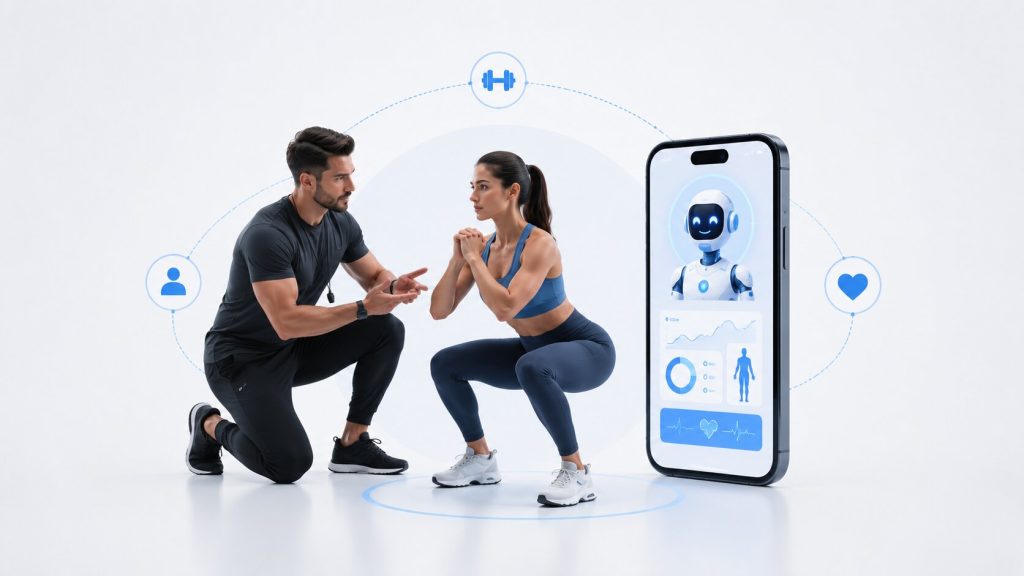
    This is exactly why the smartest fitness-tech businesses in 2026 aren’t positioning AI as a full replacement. They’re positioning it as the layer that makes human coaching scalable and affordable, automating the data-heavy grunt work so trainers can spend their time on judgment calls that actually need a human.

    What Users Actually Want From an AI Personal Trainer App?

    Real user feedback across app stores reveals a consistent pattern: people want to press play and be guided, not think through their own programming. This is the exact insight that should shape product decisions for anyone building an AI personal trainer and nutritionist app or a standalone workout coach.

    Users specifically respond to:

    • Coaching that requires zero setup, thinking — “just open it up, press play”
    • Adaptation that happens during the workout, not only between sessions
    • Non-punitive handling of missed workouts, adjusting the plan instead of guilt-tripping the user
    • Equipment-flexible programming that works at home, in a hotel gym, or at a full gym

    Where AI Coaching Still Falls Short — And Why That’s an Opportunity

    No serious content strategy on this topic should oversell AI. The honest gaps are where the real product opportunity sits for 2026 builders.

    Experienced coaches point out that data-only coaching misses what one endurance athlete called “perceived exertion awareness” — the ability to read your own body before a metric confirms it. This self-knowledge takes years to build, and beginners following a pure AI workout plan never get the chance to develop it if the app does all the thinking for them.

    There’s also a real safety consideration. One elite athlete who has spoken openly about a past eating disorder noted that AI platforms only know what a user tells them, and struggling users are often the least likely to be honest about their state. This is a critical design consideration for anyone building fitness AI: an AI personal trainer app free of human oversight for vulnerable users can be risky, not just imperfect.

    The practical takeaway for product teams: build in human-in-the-loop escalation paths, not just smarter algorithms.

    The 2026 Playbook: Agent-First, Human-in-the-Loop

    The strongest fitness-tech products emerging in 2026 aren’t choosing between AI and human coaching; they’re combining both deliberately.

    • AI handles the volume work: tracking, pattern recognition, rep counting, recovery flagging, and day-to-day plan adjustments
    • Humans handle the judgment work: interpreting the “inner life” of an athlete, building trust, and stepping in when something doesn’t add up numerically but feels off
    • The business benefit is real: one coach interviewed in the Forbes piece compared this shift to the arrival of ATMs in banking; the total number of coaching relationships a business can support goes up, not down, when AI absorbs the repetitive data work

    For founders and decision-makers building in this space, this is the model worth architecting around: an AI personal fitness trainer engine as the always-on layer, with human oversight built in for edge cases, safety flags, and users who need more than an algorithm can give.

  • The Rise of AI Agents: The Future of Enterprise Automation

    The Rise of AI Agents: The Future of Enterprise Automation

    Your team still spends hours every week on tasks a computer could finish in minutes:

    • Reconciling invoices
    • Routing tickets
    • Chasing approvals

    Traditional automation helped, but it only followed rules you wrote for it. AI agents do something different. They observe, decide, and act on their own, adjusting as conditions change rather than breaking when something unexpected happens.

    For business owners and IT decision-makers, this isn’t a future concept anymore. It’s already running inside banks, hospitals, and manufacturing floors, cutting costs by double digits and freeing teams for higher-value work.

    This blog covers what’s actually driving this shift and how to think about it before you invest.

    Key Takeaways

    • AI agents observe, plan, and act with minimal human oversight, unlike traditional software that only follows fixed rules.
    • The market for AI agents is projected to grow at a 45% CAGR over the next five years, according to BCG.
    • Agentic process automation can push autonomous operations from 20 to 30% of processes up to 50% or more, per Automation Anywhere.
    • Real deployments are already showing results: one bank cut customer service costs by 10x using AI agents, and a global retailer saved more than $2 million annually.
    • Success depends on data readiness and human oversight, not just picking the flashiest agent platform.

    What Are AI Agents?

    AI agents are software systems that use AI models and tools to accomplish goals with minimal human input. Unlike a chatbot that just answers a question, an agent can remember context across tasks, decide when to pull data from your systems, and take action on your behalf. Think of it less like a tool and more like a digital teammate that works through a process the way a person would, just faster and without needing sleep.

    An autonomous AI agent doesn’t wait for instructions, it notices a problem, figures out what to do about it, and does it, checking in with a human only when the stakes are high enough to need one.

    AI Agents vs Generative AI: What’s the Difference?

    This is one of the most common points of confusion, so let’s clear it up directly.

    Confusion Points Generative AI Agentic AI
    What it does Generates content, text, images, and code on request Plans and executes multi-step tasks autonomously
    How it works Responds once per prompt Observes, plans, acts, and adapts in a continuous loop
    Memory Typically stateless per conversation Retains context across tasks and time
    Decision-making None, it produces output, you decide what to do with it Makes decisions and takes action within defined guardrails
    Best for Drafting, summarizing, ideation Running workflows: approvals, reconciliation, reporting, orchestration

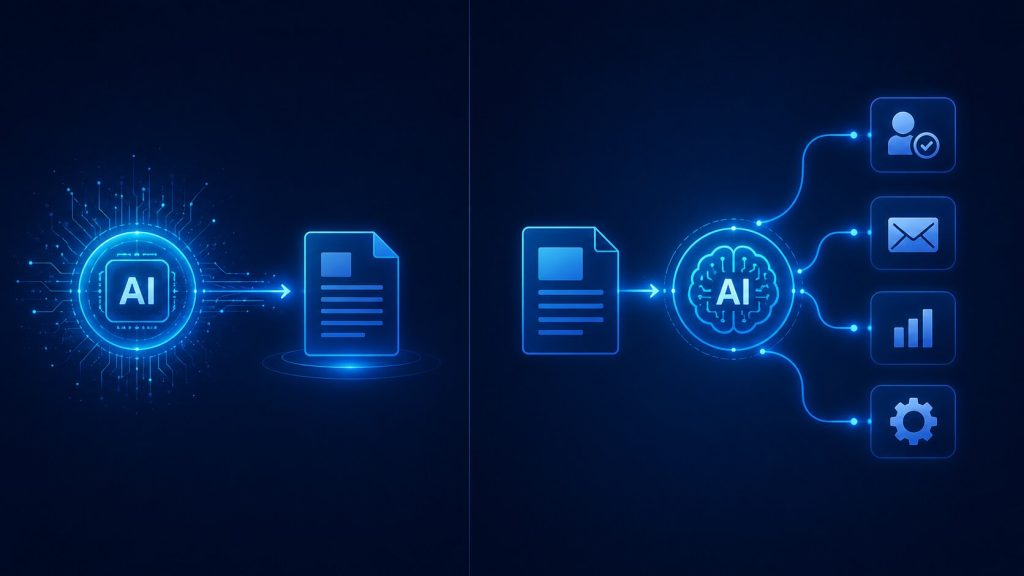
    Put simply: generative AI writes the email. An AI agent decides the email needs to be written, drafts it, checks it against your policy, and sends it once approved. That distinction is the entire reason agentic AI vs generative AI searches have spiked this year.

    Businesses have moved past experimenting with chatbots and are now asking what it takes to automate actual decisions, something our AI agent development team gets asked constantly.

    How Do AI Agents Actually Work?

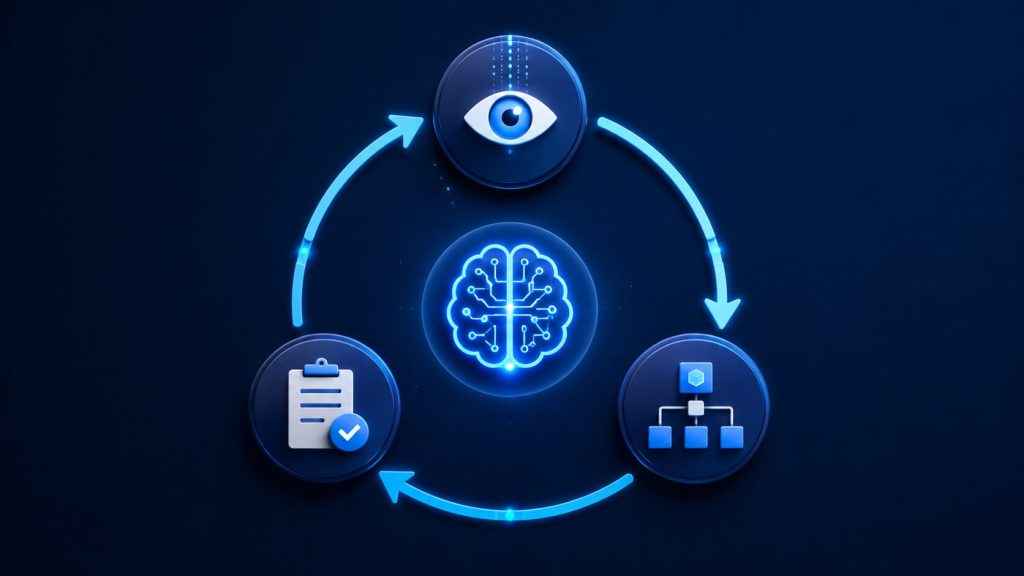
    Every AI agent runs on a repeating cycle, sometimes called observe-plan-act:

    1. Observe: The agent collects information from its environment, user inputs, system data, past interactions, and holds that in memory.
    2. Plan: Using a language model, it evaluates options and decides the best next step based on its goal and the context it has gathered.
    3. Act: It executes the task by connecting to enterprise systems, CRMs, ERPs, databases, or by delegating to another agent.

    This loop is self-reinforcing. Each cycle, the agent learns from what happened last time and gets more efficient. That’s fundamentally different from older rule-based automation, which just repeats the same steps regardless of what’s changed around it.

    Types of AI Agents in the Enterprise

    Not every agent does the same job. Enterprises typically deploy four broad categories:

    • Conversational agents: Handle employee or customer inquiries with fast, accurate responses.
    • Task automation agents: Execute structured, repetitive processes like payroll runs or invoice validation.
    • Intelligent process agents: Analyze large datasets to recommend actions, useful for financial forecasting or marketing optimization.
    • Autonomous AI agents: Manage end-to-end workflows with minimal human input, adapting as conditions shift. These are the most advanced categories, capable of owning a process from start to finish without a person triggering each step.

    Most organizations start with the first two, then graduate to autonomous agents once trust and governance are in place, a progression that mirrors what we see across our AI/ML development engagements.

    Why AI Automation Is Different From Traditional RPA

    AI automation uses AI models, machine learning, NLP, and predictive analytics to complete business tasks without a human manually triggering each step. If you’ve used robotic process automation (RPA) before, you already know its limitation: it breaks the moment a screen layout changes or an input doesn’t match the expected format.

    AI automation solves this by combining machine learning, natural language processing, and predictive analytics, so the system adapts instead of failing.

    This is the core idea behind AI business process automation. Instead of scripting every possible scenario, you give the agent a goal and let it figure out the path, correcting itself along the way. That’s a meaningful shift for enterprise AI automation strategy, because it means fewer maintenance headaches and far less brittle automation than the RPA bots most IT teams are used to babysitting.

    Do You Need AI Automation Services, or Can You Build In-House?

    Most enterprises don’t have a team of agent engineers sitting idle, and that’s exactly why demand for AI automation services has grown so fast. Building an agent that reliably connects to your ERP, respects compliance rules, and knows when to escalate to a human isn’t a weekend project. It requires the same senior-architect oversight you’d expect from any production system.

    That’s the gap external AI automation services fill: they bring the integration experience, the governance frameworks, and the pattern library from having done this before, so you’re not debugging agent failures in production. If you’re weighing build versus buy, our AI integration team can map out which processes are worth building in-house and which are faster to bring in expert help for.

    Real Business Impact: The Numbers Behind the Hype

    Skeptics are right to ask if agentic AI is just another buzzword. The data says otherwise.

    • A leading global bank used AI agents to interface with customers, cutting service costs by 10x.
    • A major U.S. retailer used AI agents for accounts payable and customer service, saving more than $2 million annually and dropping average call times to 85 seconds.
    • One energy company used generative AI-embedded agents to uncover $120 million in tax savings in just three weeks.
    • A healthcare provider automated billing and processed nearly $1 billion annually while saving 25,000 staff hours a year.

    These aren’t hypothetical projections. Our own supply chain AI orchestration case study shows a similar pattern: a 60% reduction in operational costs once agentic workflows replaced manual coordination.

    Agentic AI use cases are already delivering measurable results across industries, check out our other case studies to understand them better.

    Each use case follows the same underlying pattern: replace a manual, repetitive decision with an agent that can make that decision reliably and explain why.

    What Makes a Good AI Agent Builder or Platform?

    If you’re evaluating an AI agent builder, ask these questions before committing:

    1. Does it integrate with your existing systems? ERP, CRM, and HCM integration determines whether the agent actually works across your business or stays stuck in a silo.
    2. Can it operate across departments, not just inside one app? Siloed AI tools often improve a single team’s efficiency by a few percentage points while barely moving the needle company-wide.
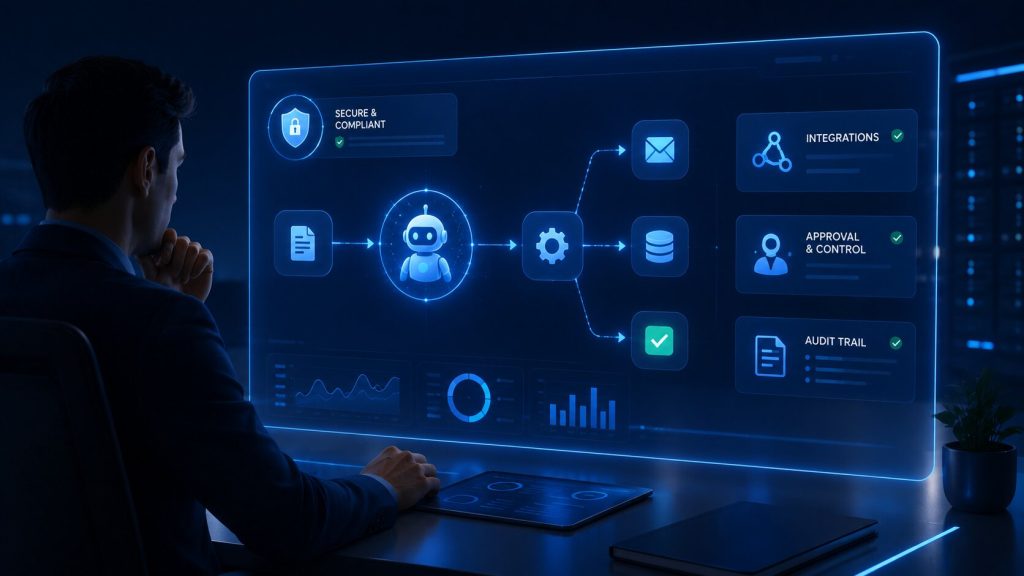
    3. Does it support human-in-the-loop review for high-stakes decisions? Full autonomy isn’t the goal on day one, trustworthy autonomy is.
    4. Is it built with security and compliance in mind? Look for role-based access, encryption, and audit logging, especially in regulated industries.
    5. Can it scale from task automation to full workflow ownership? The best platforms let you start small and expand agent authority as trust builds.

    If you’d rather have this mapped against your own systems than guess, our AI strategy & consulting team can walk through what a phased rollout would look like for your business.

    Are Agentic AI Companies the Future of Enterprise Software?

    The direction of travel is clear. BCG projects the AI agent market will grow at a 45% CAGR over the next five years, and nearly three-quarters of CEOs now consider themselves their company’s chief decision maker on AI investment. Agentic AI companies are no longer a niche category, they’re becoming the default layer enterprises build on top of, replacing large teams of people with smaller teams working alongside multiple types of agents.

    That said, autonomy doesn’t mean unsupervised. Supervising AI agents is becoming a core management skill in its own right, and the enterprises getting this right are training employees in responsible AI oversight, not just deploying agents and walking away.

    Final Words

    AI agents represent the biggest shift in enterprise software since the move to the cloud. They don’t just execute rules, they observe, plan, and act, adapting as your business changes around them. But the companies seeing real ROI aren’t the ones chasing full autonomy on day one. They’re starting with high-impact, well-defined use cases, keeping humans in the loop on high-stakes decisions, and scaling agent authority as trust builds.