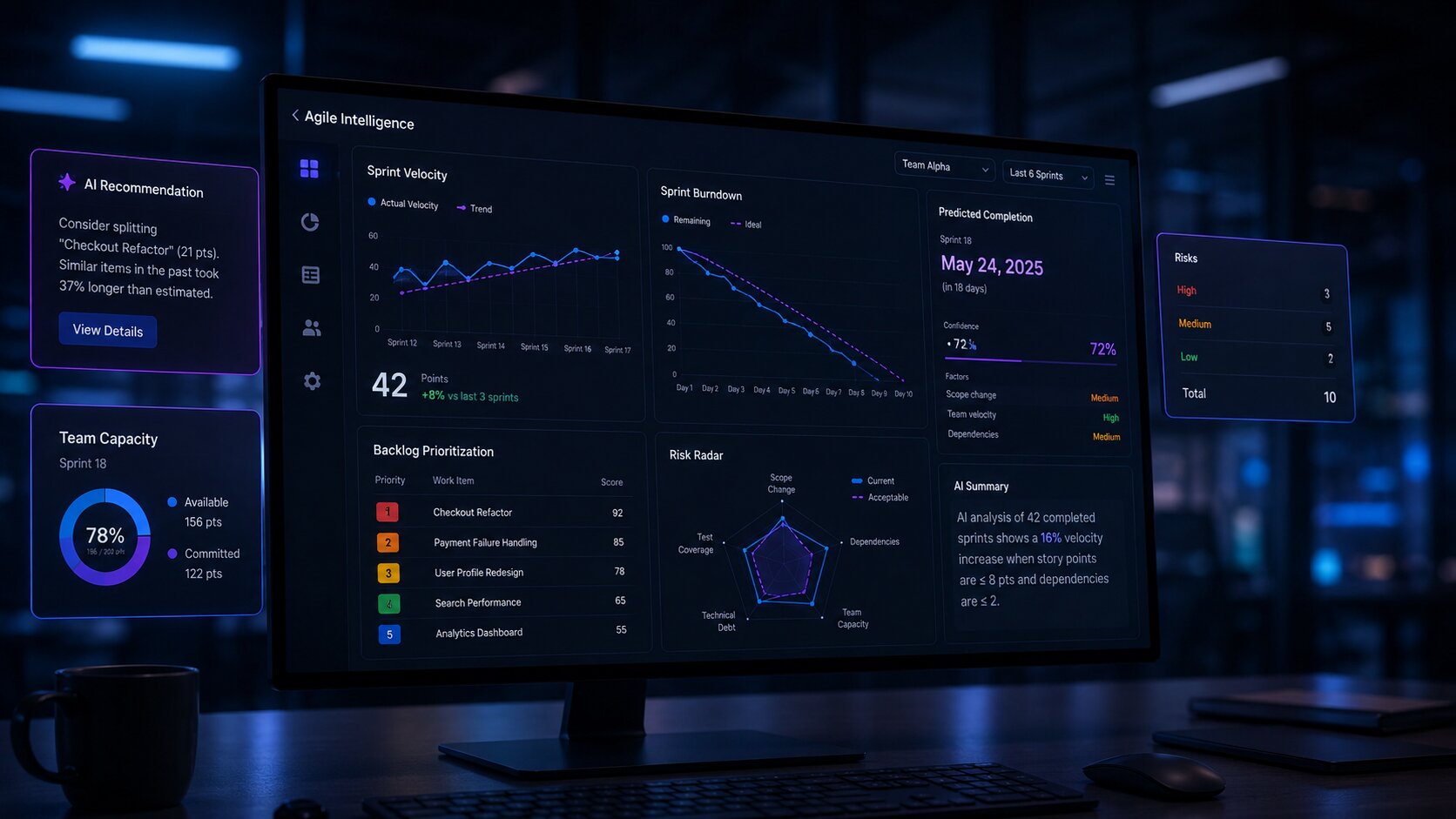
Software teams are not writing code the old way anymore. AI in software development has moved past isolated autocomplete suggestions and turned into a full engineering partner that plans, codes, tests, and even manages sprints alongside human teams. If you run a dev team, lead a product roadmap, or you’re a student trying to understand where the industry is heading, this shift changes almost every part of the software development lifecycle.
This blog breaks down how AI coding tools, agentic AI in software development, and AI in agile project management are reshaping delivery speed, code quality, and business outcomes in 2026.
Key Takeaways
- AI in software development now spans the full lifecycle, from requirements to deployment, not just code generation.
- 92% of developers already use AI coding assistants monthly, but results depend heavily on existing process discipline.
- Agentic AI in software development is shifting engineers from writing code to orchestrating and reviewing agent output.
- AI in agile project management is automating backlog grooming, sprint planning, and requirement mapping, cutting planning friction.
- Human-in-the-loop checkpoints, not full autonomy, separate reliable AI adoption from risky rollouts.
- Security, IP ownership, and integration complexity remain real risks that need governance from day one.
- Structured adoption, starting small with clear approval gates, consistently outperforms a rushed, all-at-once rollout.
What Is AI-Powered Agile Development?
It blends core Agile principles iteration, feedback, teamwork with AI that actively helps plan, build, and ship software: drafting requirements, proposing architecture, writing code, generating tests, and flagging risks early.
Amazon calls this the AI-Driven Development Lifecycle: bolting AI onto old rituals just reinforces old inefficiencies. Real gains come when AI is a central collaborator across the whole lifecycle, not a one-off tool.
Their model runs on three phases:
| Phase | What AI Does | What Humans Do |
|---|---|---|
| Inception | Turns business intent into requirements and user stories | Validate AI’s proposals and questions |
| Construction | Proposes architecture, writes code, generates tests | Approve technical and design decisions |
| Operations | Manages infrastructure-as-code and deployments | Oversees outcomes and quality gates |
This “AI proposes, human decides” loop is quickly becoming the backbone of agile AI development across enterprises and startups alike.
Why Agile Teams Can’t Ignore AI in 2026?
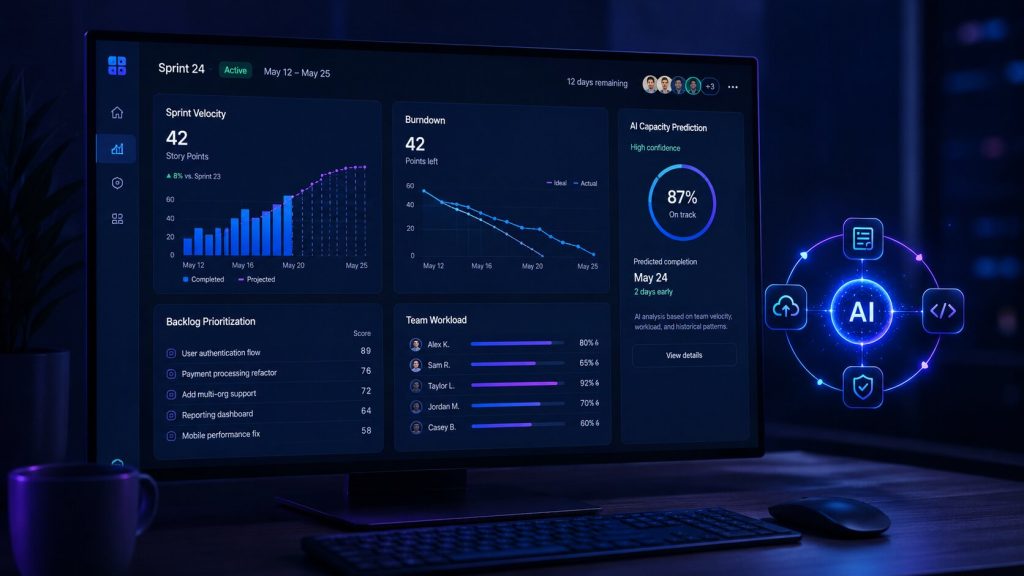
The adoption numbers make the case on their own. At The Pragmatic Summit in early 2026, developer productivity researcher Laura Tacho shared fresh data showing that 92% of developers now use AI coding assistants at least once a month, saving teams an average of close to four hours a week on self-reported tasks. AI-driven onboarding has also sped up significantly for new hires over the past year
But the same research flagged something important for business owners: results are uneven. Organizations with healthy engineering practices before AI adoption saw incidents drop by roughly 50%, while dysfunctional teams saw incidents double after adopting the same tools. AI amplifies whatever process discipline already exists. It doesn’t fix a broken one.
That’s exactly why generative AI in software development works best when it’s introduced with structured governance, not dropped into chaos.
At VectovateAI, this is the foundation of how we approach our development methodology: senior oversight on every AI-generated line, not junior devs experimenting on your budget.
Best AI Coding Tools 2026: A Quick Comparison
The market for AI code generation tools has matured fast, moving from basic autocomplete to full function and module generation with built-in test coverage. Picking the right tool matters as much as picking the right process. Here’s how leading platforms stack up for teams evaluating best AI coding tools for developers in 2026:
| Tool | Core Strength | DevOps Integration | Best For |
|---|---|---|---|
| GitHub Copilot | Context-aware code suggestions | Deep GitHub Actions integration | Teams already on GitHub |
| Amazon Q Developer / CodeWhisperer | AI-DLC native workflows | Native AWS integration | AWS-heavy stacks |
| Tabnine | Autocompletion, code prediction | CI/CD pipeline support | Privacy-focused orgs |
| Devin-style autonomous agents | End-to-end task execution | CI/CD integration | Complex, multi-step builds |
| Replit / Ghostwriter | Browser-based debugging | GitHub, CI workflows | Fast prototyping |
No single tool wins across every use case. Teams pairing a code-generation tool with an agentic AI layer for orchestration tend to see the biggest lift in delivery speed.
AI in Agile Project Management: Beyond the Codebase
AI in agile project management is no longer limited to writing code faster. It’s changing how sprints get planned, how backlogs get groomed, and how standups happen.
Some of the clearest use cases:
- Automated backlog grooming: AI clusters and prioritizes tickets based on historical velocity and business risk.
- NLP-based requirement mapping: Vague stakeholder input gets converted into structured user stories, cutting down the back-and-forth between product owners and engineers.
- Predictive sprint planning: AI flags realistic sprint capacity based on team history, not gut-feel estimates.
- Continuous quality monitoring: Real-time code quality and test coverage tracking replaces end-of-sprint surprises.
CIO‘s coverage on best AI PM tools for agile software development notes that AI assistants are also closing onboarding gaps. New engineers ramp up faster because AI tools explain existing code and provide contextual help instead of forcing them to read through legacy documentation line by line.
Generative AI Use Cases in Software Development
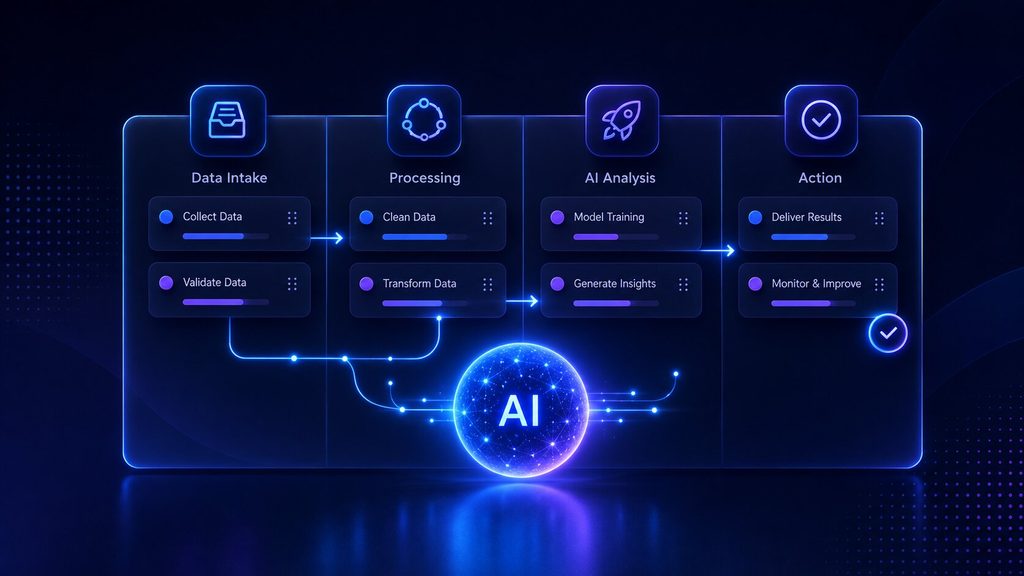
Generative AI use cases in software development now go far beyond writing new functions. Teams are applying it across nearly every stage of the build process:
- Code generation and completion: drafting boilerplate, functions, and full modules from natural-language prompts.
- Automated documentation: generating and updating technical docs as code changes, instead of leaving them stale.
- Test case generation: creating unit and integration tests aligned to actual code paths, not generic templates.
- Code refactoring and modernization: rewriting legacy code into cleaner, maintainable structures with minimal manual rework.
- Bug detection and root-cause analysis: scanning commits and logs to flag likely failure points before QA does.
- Synthetic data generation: producing privacy-safe test data for QA environments without touching real user data.
Agentic AI in Software Development: The Real 2026 Shift
This is the part most blogs gloss over. Agentic AI in software development doesn’t just autocomplete a function. It runs multi-step workflows on its own, checking in with humans only at decision points.
Atlassian‘s ex-CTO, Rajeev Rajan, described how some engineering teams now have members writing close to zero lines of code by hand. Their output is orchestrating AI agents instead, and teams report producing significantly more without expanding headcount.
The direction of travel, based on CIOs’ reporting, includes:
- Autonomous SDLC loops: agents generate stories, code, and tests, while humans approve reasoning, not raw code diffs.
- Multi-agent ecosystems: specialized agents for requirements, architecture, and testing negotiate trade-offs between speed and cost.
- Self-healing runtimes: agents detect early signs of failure and patch issues before they hit production.
This is where human-in-the-loop design matters most. Full autonomy without checkpoints creates risk. Agent orchestration with clear human approval gates is what separates a reliable AI-native team from a risky one. It’s also the exact philosophy behind our AI agent development services, where every agent workflow ships with human oversight built in, not bolted on later.
How to Use AI in Software Development: A Practical Starting Point?
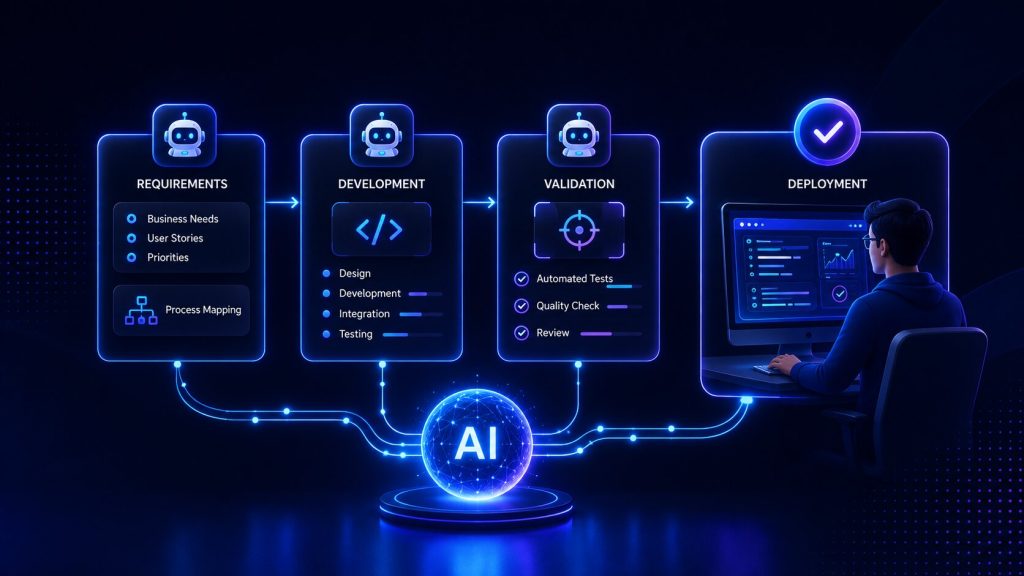
If you’re wondering how to use AI in software development without breaking existing workflows, start small and structured:
- Pick one lifecycle stage first. Testing and code review are lower-risk entry points than full autonomous builds.
- Set clear approval gates. Decide upfront what AI can ship without review and what always needs a human sign-off.
- Measure before and after. Track DORA metrics, defect escape rate, and cycle time, not just “developer happiness.”
- Train your team on prompting and review, not just tool usage. The skill gap isn’t using AI. It’s knowing when to trust it and when to override it.
- Bring in senior oversight for architecture decisions. AI can propose a design. It shouldn’t finalize one alone.
Teams unsure where to start this process can get a structured roadmap through a software consulting engagement that maps AI adoption against real business risk, not hype.
The Risks Nobody Talks About Enough
AI-powered agile development isn’t risk-free. Reporting from CIO flags several recurring concerns for engineering leaders:
- Data security: AI tools often need access to source code and internal docs, which raises exposure risk.
- Reliability: AI suggestions still need human validation to catch bias or subtle errors.
- Integration complexity: Plugging AI into legacy workflows takes real customization, not a plug-and-play setup.
- IP and licensing questions: AI-generated code raises open questions about originality and licensing.
Kent Beck, Laura Tacho, and Steve Yegge, speaking at a 2026 industry retreat on the future of software development, put it plainly: organizations are limited by human and systems-level problems first. No tool fixes a broken process by itself.
That’s a useful reality check for any team chasing AI adoption purely for speed.
Conclusion:
AI-powered agile development is not a future trend anymore. It’s the operating model most competitive engineering teams are already running on. The teams winning with it are the ones pairing fast AI execution with disciplined human oversight, not the ones removing humans from the loop entirely.