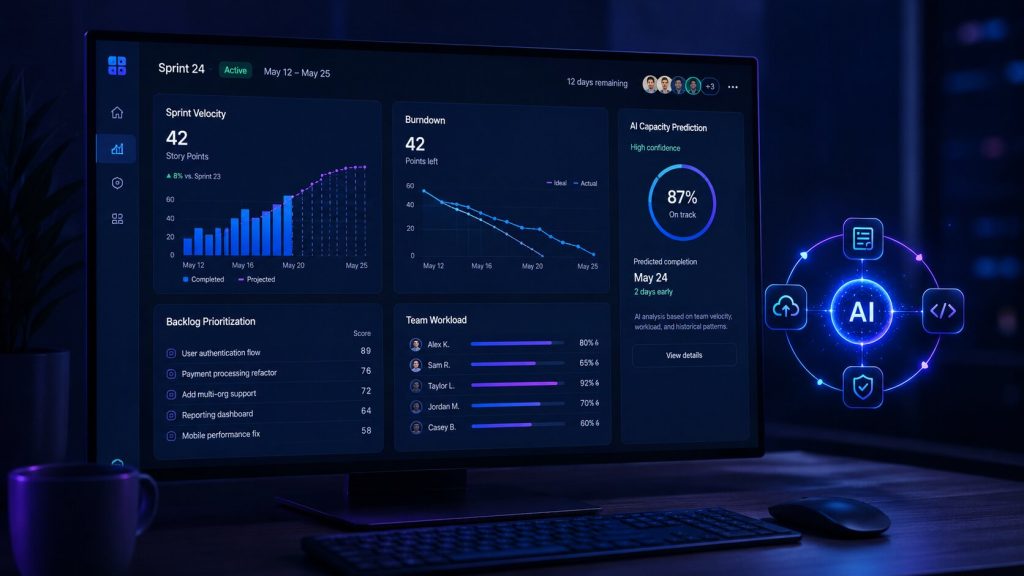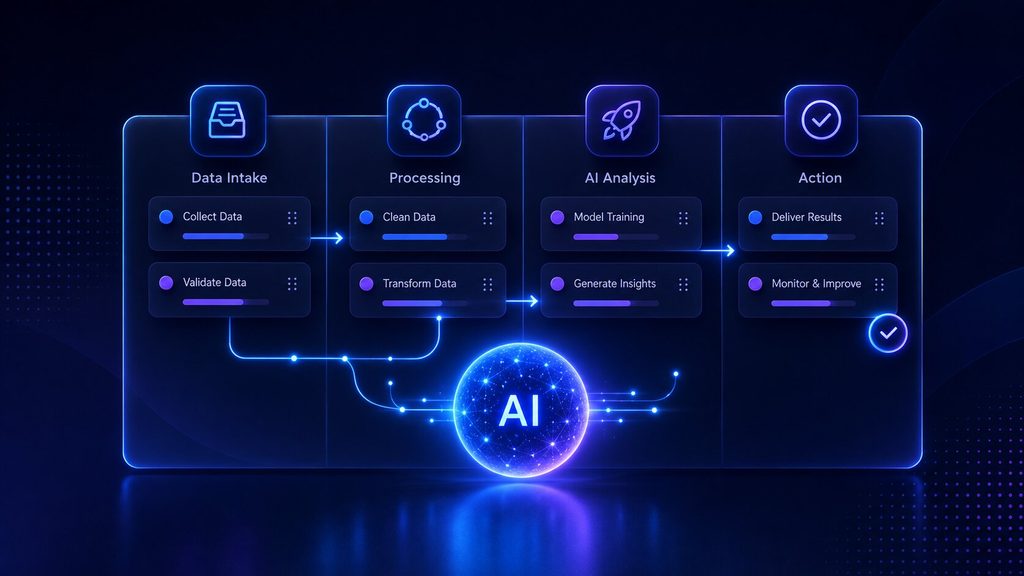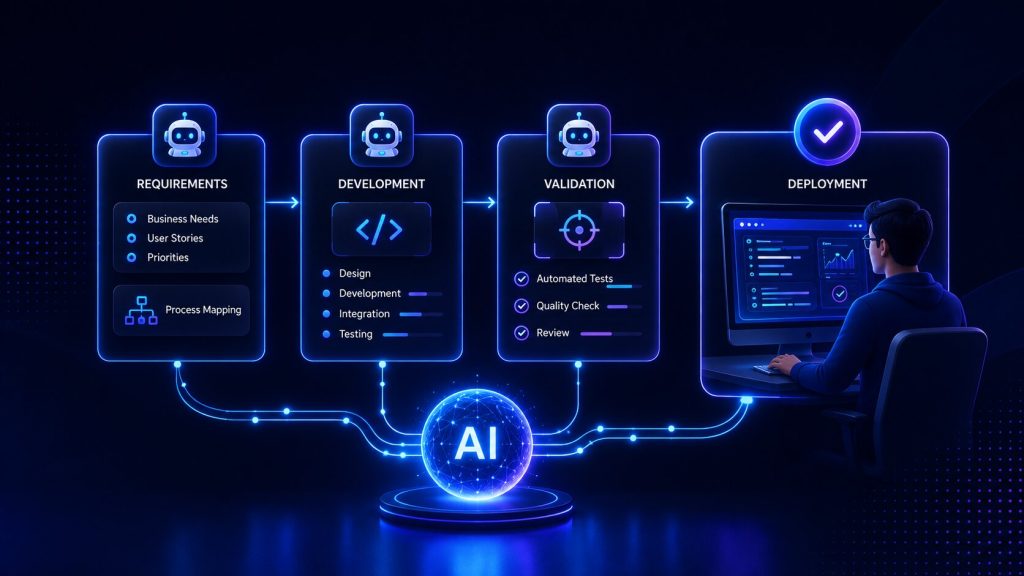
Customer expectations have changed. People want instant answers now. They want help at any hour. This is where AI chatbots improve customer experience the most. Businesses in every sector are noticing the shift. Support teams cannot scale with humans alone. AI chatbots fill this exact gap. They combine speed, availability, and personalization.
A Gartner survey found that 80% of companies are either using or planning to adopt AI-Native chatbots for customer service, a clear signal that instant, always-on support has become a baseline expectation.
Key Takeaways
- AI chatbots now handle context, tone, and intent along with the keywords thanks to conversational AI and NLP.
- Businesses see measurable gains: 24/7 availability, instant responses, lower support costs, and consistent accuracy at scale.
- Generative AI chatbots go beyond scripted Q&A, offering context-aware responses that can summarize, explain, and reason.
- Retail, banking, healthcare, insurance, travel, and SaaS are all seeing chatbots resolve issues.
- The winning model pairs agent-first automation with human-in-the-loop oversight, balancing speed with accountability.
What Are AI Chatbots, Really?
Modern AI-Native agents are autonomous, cognitive workflows engineered to process intent, context, and nuance far beyond scripted logic. Unlike legacy rule-based bots, these agents draw on machine learning and natural language processing (NLP) to handle complex customer queries and sharpen their accuracy with every interaction. Deployed across websites, apps, and social platforms, they deliver a customer experience that feels less robotic and far more human.
Conversational AI & Natural Language Processing: How Chatbots Understand Customers?
At the core of these systems lies Conversational AI, leveraging sophisticated Natural Language Processing (NLP) to break down complex syntax, identify user intent, and evaluate sentiment in real time. This is how modern agents grasp what customers actually mean, moving well past simple keyword matching to understand slang, typos, and phrasing variations across languages at scale.
A customer in Delhi and one in Dubai get equally accurate responses. Sentiment analysis adds another layer of understanding. Chatbots detect frustration or urgency in messages. They then escalate to human agents when needed. This blend of conversational AI and NLP creates smoother experiences for customers reducing drop-offs and repeated queries.
This technology keeps improving with every conversation logged, training the model further. That’s why intelligent chatbots feel smarter every month.
Key Benefits: How AI Chatbots Improve Customer Experience
AI chatbots improve customer experience through clear, measurable value. Here’s a quick breakdown of core benefits.
| Benefit | Impact on Customer Experience |
|---|---|
| 24/7 Availability | Customers get help anytime, anywhere |
| Instant Responses | No waiting in long support queues |
| Personalization | Recommendations based on past behavior |
| Cost Efficiency | Lower support costs, higher scalability |
| Consistency | Same accurate answer, every single time |
| Multilingual Support | Serves global customers without extra staff |
| Data Insights | Captures patterns for better decision-making |
Let’s unpack a few of these further.
- Speed matters more than ever, as customers now expect replies within seconds.
- Personalization builds loyalty, since AI virtual assistants remember and act on past preferences.
- Scalability solves seasonal spikes, letting bots handle thousands of chats simultaneously.
- Consistency reduces errors, since there’s no fatigue and no mood based mistakes to work around.
- Insights improve strategy, turning every chat into usable business data.
These benefits compound over time making AI Chatbots cost-effective and also helps businesses build stronger customer relationships.

Real-World Use Cases Across Industries
AI chatbots aren’t limited to one industry, it scales businesses across industries based on their model.
Retail and E-commerce
Behind the scenes, the agent connects to product information management (PIM) and inventory systems in real time. It cross-references SKU-level data to guide shoppers through catalogs, sizing, and shipping questions with precision.
When a customer hesitates, order management APIs let it process returns and exchanges autonomously, catching that moment before it turns into cart abandonment.
Banking and Finance
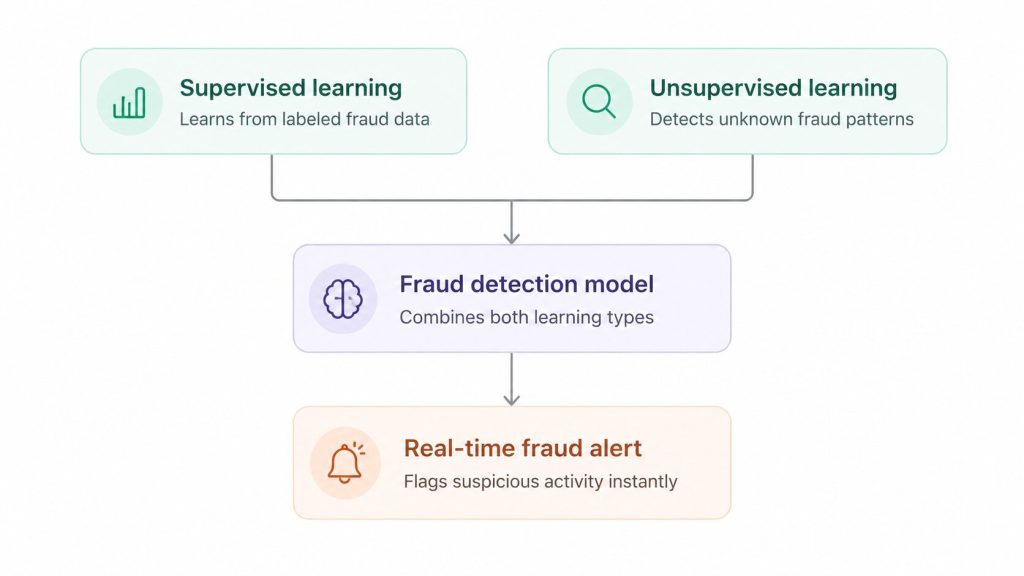
In banking, agents plug into core systems via secure APIs to surface balance and transaction data instantly. Fraud-detection models run in parallel, flagging suspicious activity in real time.
Verified, token-based authentication lets them resolve identity-sensitive requests without a single trip to a branch queue.
Healthcare
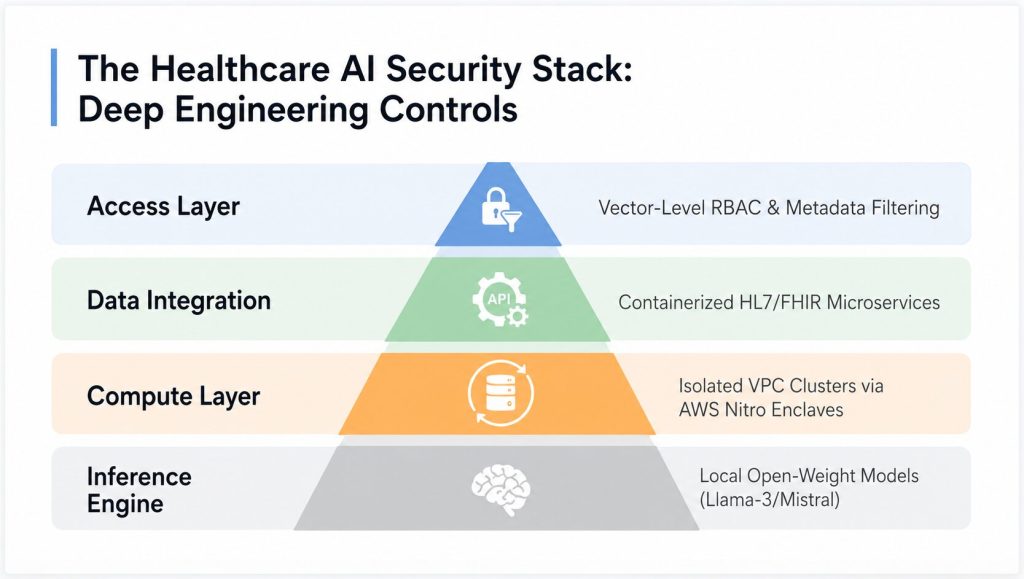
Healthcare agents integrate with EHR and scheduling systems to book appointments and send medication reminders without human intervention. They cross-check provider availability and patient history as they go.
Built-in triage logic then evaluates symptoms against clinical protocols, guiding patients before they ever see a doctor and easing pressure on front-desk staff.
Insurance
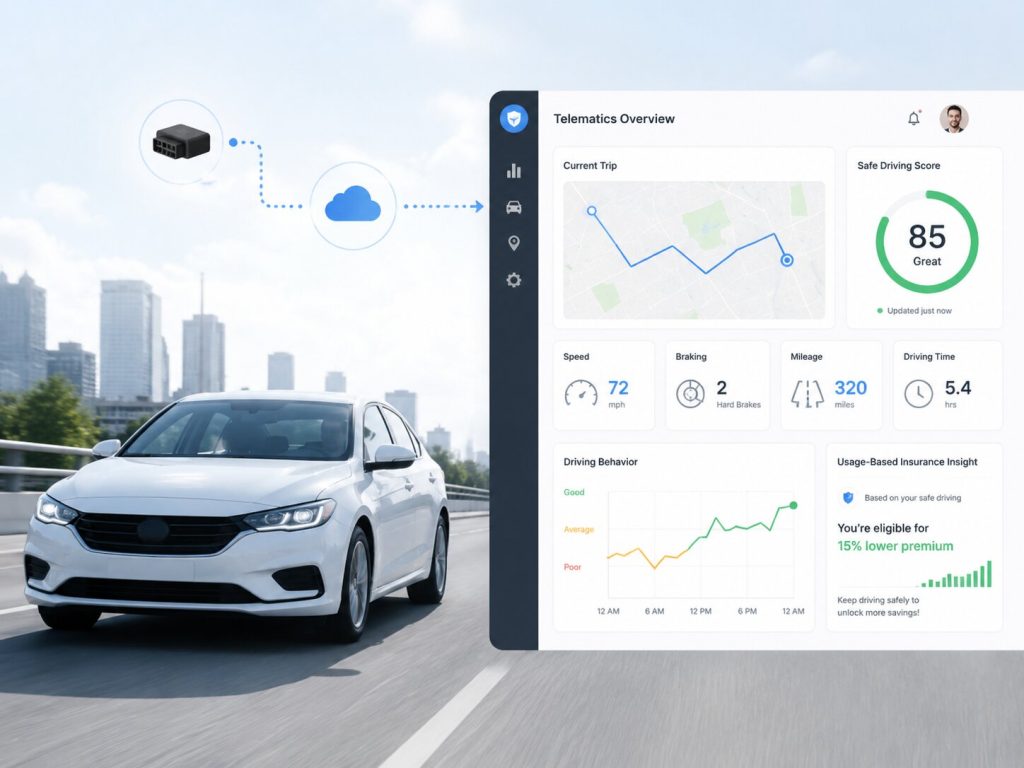
AI-Native agents integrate directly with legacy Core Insurance Systems via secure APIs, cross-verifying policy documentation and validating claims criteria autonomously.
This removes manual back-and-forth entirely, letting agents trigger instant processing pathways while giving customers real-time claim status without a single phone call. What once was a traditionally slow process becomes a streamlined, self-service experience.
Travel and Hospitality
Travel agents connect directly to Global Distribution Systems (GDS) and property management platforms via API. They handle bookings, cancellations, and itinerary changes against live inventory, and push flight or hotel updates the moment they change. Call-center volume drops dramatically as a result.
SaaS and Technology
In SaaS, agents hook into product telemetry and knowledge-base APIs to onboard new users through walkthroughs tailored to their behavior. They cross-reference logs and known issues to troubleshoot autonomously and resolve routine tickets without delay. Support teams are freed to focus on the problems that actually need a human.
Each industry sees a similar pattern. Problems shrink, outcomes improve, and impact scales.
Generative AI Chatbots: The Next Leap Forward
Generative AI chatbots represent the newest evolution, moving beyond fixed scripts to generate original, context-aware responses that make conversations feel far more natural. Where traditional bots followed rigid decision trees, generative AI chatbots understand nuance and context deeply enough to summarize, explain, and even reason.
Businesses now use them for complex support scenarios, as well as content generation and drafting. This shift moves chatbots beyond simple Q&A. They become genuine problem-solving assistants, giving customers richer, more helpful conversations and companies a competitive edge through innovation.
What Industry Leaders Say About AI-Driven Customer Experience?
Global leaders are validating this shift too. Their research points to consistent patterns.
- Enterprise automation is accelerating, with companies now using AI agents for both simple and complex queries.
- Predictive analytics adds foresight, helping businesses anticipate customer needs before they even ask.
- Intelligent handoffs matter most, since bots know exactly when to bring a human into the conversation.
- Omnichannel consistency builds trust, giving customers the same experience everywhere they show up.
- Conversation insights drive strategy, since every chat reveals patterns worth acting on.
AI Virtual Assistants vs Traditional Chatbots
Not all chatbots are created equal. Here’s how they differ.
| Feature | Traditional Chatbots | AI Virtual Assistants |
|---|---|---|
| Understanding: | Keyword-based matching | Context and intent-based |
| Learning: | Static, rule-based logic | Continuously learns and adapts |
| Personalization: | Minimal or none | Deep, behavior-based personalization |
| Complexity Handling: | Struggles with nuance | Handles multi-step conversations |
| Scalability: | Limited use cases | Enterprise-wide deployment ready |
This comparison shows why businesses are upgrading. Static bots simply can’t compete anymore.
Challenges Businesses Should Still Consider
AI chatbots aren’t a magic fix. They need thoughtful design and oversight.
- Training quality matters, since poorly trained bots frustrate customers quickly.
- Data privacy is critical, so businesses must follow regional regulations strictly.
- Human-in-the-loop design helps, since complex or emotional queries still need human escalation.
- Hybrid systems build trust, keeping automation and empathy in balance.
- Knowing limits is key, since the best bots hand off gracefully when needed.

Why does an Agent-First Approach Win?
Modern customer experience needs more than chat. It needs autonomous, goal-driven AI agents. Agent-first design lets chatbots take action. They don’t just answer; they resolve issues. This means booking, refunding, or updating records directly. Combined with human oversight, this creates trust. Customers get speed without losing accountability. This is the direction the industry is heading. Businesses that adopt it early gain an advantage.
VectovateAI, AI Chatbot Development Company in India
VectovateAI is an AI chatbot development company based in Ahmedabad, building intelligent chatbots for growing businesses.
Every AI-Native agent that VectovateAI ships is architected for enterprise scrutiny from day one. We build with GDPR and SOC 2 readiness embedded in the data pipeline, connect secure vector databases to power Retrieval-Augmented Generation (RAG) so responses stay grounded in verified enterprise data, and layer in guardrails engineered to drive hallucinations toward zero.
It is the architecture layer most vendors skip, and the reason global enterprises trust us with production-scale deployments. If you want AI chatbots that improve customer experience, we can help. Let’s build an intelligent AI Chatbot/Agent together.
Final Thoughts
AI chatbots have moved far beyond simple FAQs. They now shape entire customer journeys. Conversational AI and NLP make this possible. Generative AI chatbots push boundaries even further and businesses across every industry are adopting them fast.
The benefits are clear: speed, scale, and personalization, paired with challenges that are manageable with the right approach. An agent-first, human-in-the-loop model works best, blending automation with genuine care. The future of customer experience is conversational, intelligent, and always on.