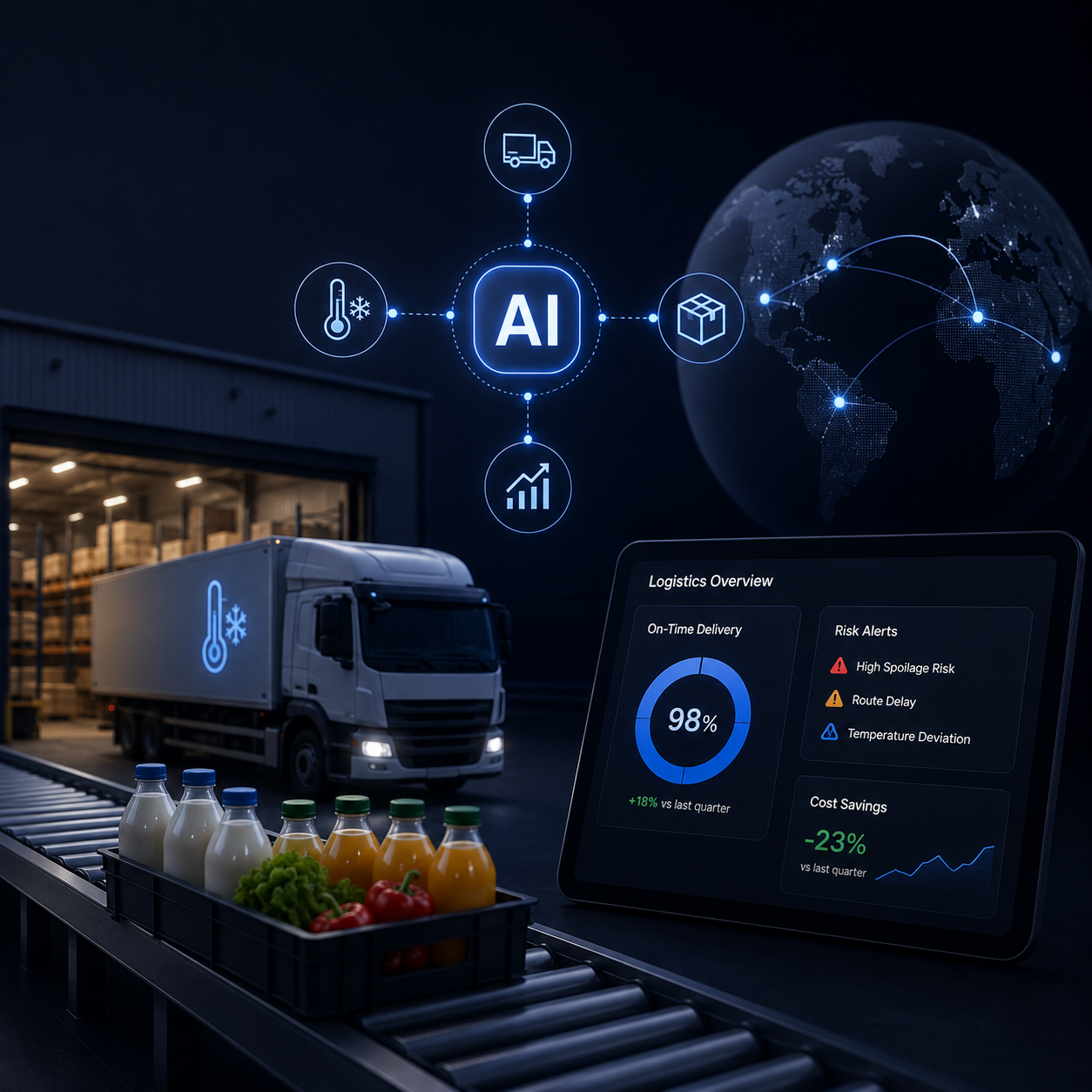
Food and beverage supply chains are breaking under pressure. Spoilage, delayed shipments, and manual coordination are costing manufacturers millions every year. AI in food supply chains is now the fastest way to fix this crisis, and 2026 is the year it stops being optional. Enterprises are moving from experimental pilots to full deployment, and the numbers prove why.
Key Takeaways
- The agentic AI in the supply chain segment is valued at $8.67 billion in 2025 and is projected to hit $16.84 billion by 2030, growing at roughly 14.2% CAGR.
- Early deployments show 30 to 50% reductions in manual workload and 80 to 90% reductions in scheduling effort, as per the AWS article.
- Food & beverage manufacturing AI solutions already hold over 30% of the FMCG generative AI market, the largest of any sub-vertical.
- AI-powered forecasting cuts supply chain errors by 20 to 50%, which translates into a 65% drop in lost sales from stockouts.
- Gartner projects that half of all cross-functional supply chain solutions will run on intelligent agents by 2030, up from under 5% in 2025.
Why Is Food & Beverage Logistics in Crisis Right Now?
Perishability makes food logistics unforgiving. A two-hour delay in a cold chain can ruin an entire truckload. Rising fuel costs, labour shortages, and unpredictable demand spikes are stacking up on manufacturers already running on thin margins.
Most F&B companies still depend on manual coordination. Someone calls the carrier. Someone else checks the warehouse system. A third person updates the retailer. This chain of manual steps is exactly where inefficiency hides, and it is why AI in food and beverage industry operations is shifting from a nice-to-have to a survival tool.
Traditional automation cannot fix this. It only follows fixed rules. When a shipment gets delayed, rule-based systems simply escalate the problem to a human. They do not investigate, they do not decide, and they do not act. That is where Agentic AI in logistics changes the game entirely.
What Is Agentic AI in Supply Chain?
Agentic AI in supply chain operations refers to systems that sense, plan, act, and learn continuously, without waiting for a human trigger. Instead of just flagging a problem, these AI agents evaluate options and take corrective action on their own.
Think of it as the difference between a smoke alarm and a firefighter. A smoke alarm only alerts you. A firefighter assesses the situation and acts. Agentic AI in food supply chains behaves like the firefighter. It reroutes shipments, re-tenders loads to alternate carriers, and updates stakeholders automatically, all within pre-approved guardrails.
Here is how agentic AI differs from the legacy automation most F&B plants still use today.
| Dimension | Traditional Automation | Agentic AI |
|---|---|---|
| Decision logic | Fixed if/then rules | Continuous sense-plan-act-learn loop |
| Data handling | Structured data only | Structured plus unstructured (emails, sensor feeds, voice) |
| Exception response | Escalates to a human, waits | Investigates and acts autonomously |
| Cold chain monitoring | Manual temperature checks | Real-time sensor-driven correction |
| Scalability | Needs more staff as volume grows | Handles complexity without added headcount |
Advantages of AI in Cold Chain Logistics
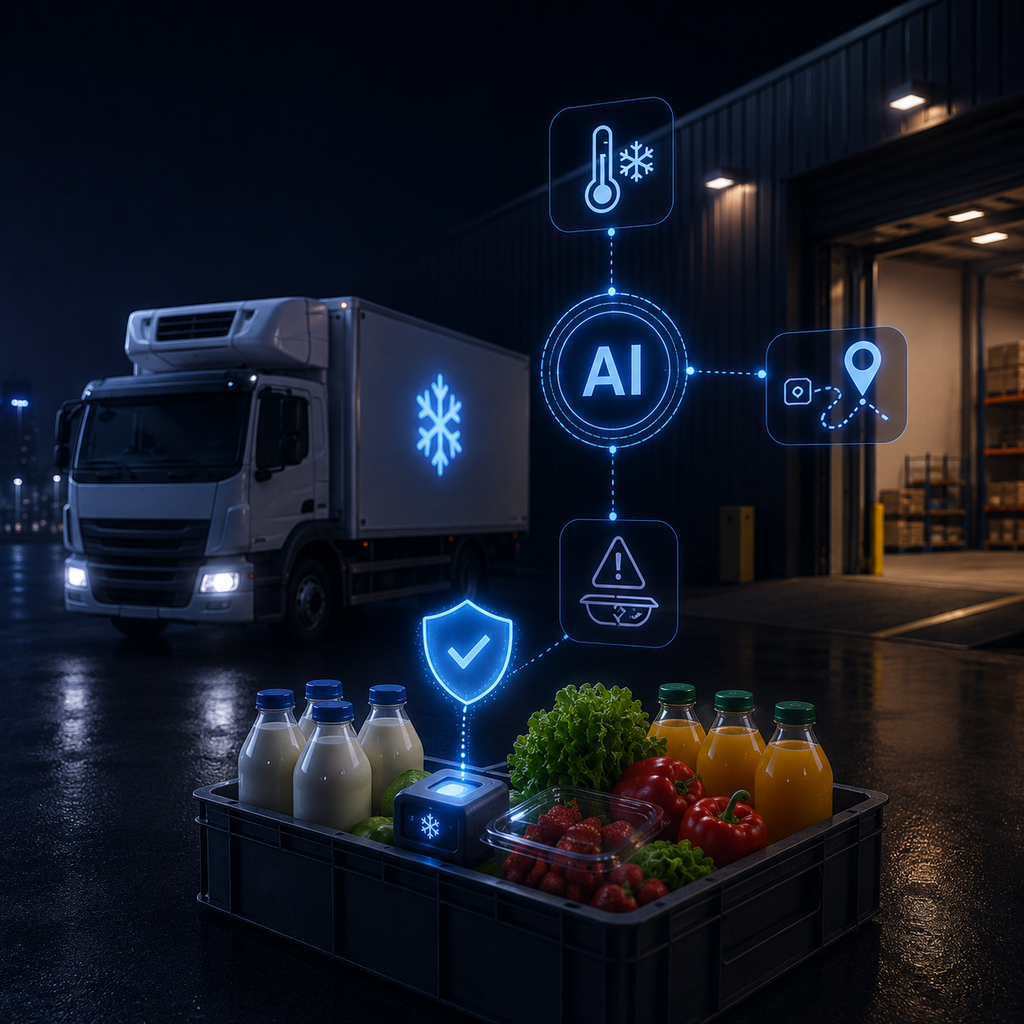
Cold chain is where food and beverage logistics gets the most unforgiving. One temperature breach can spoil an entire shipment of dairy, seafood, or ready-to-eat meals. This is where the advantages of AI in cold chain logistics become impossible to ignore.
- Predictive spoilage alerts. AI agents analyze temperature, humidity, and route data to flag risk before spoilage happens, not after.
- Autonomous rerouting. When a delay is detected, agents evaluate alternate routes and reassign shipments without waiting for manual approval.
- Reduced expedite costs. AWS ProServe and A*STAR demonstrated 3-5% savings in expedite-related logistics spend through agent-driven inventory and order orchestration.
- Continuous carrier coordination. Agents automatically follow up with carriers, cutting communication overhead by more than 70% in some deployments.
- Sustainability gains. Optimized routing reduces fuel use and emissions per delivery, which matters for F&B brands under pressure to report sustainability metrics.
For a mid-sized dairy or beverage manufacturer, these advantages compound quickly. Fewer spoiled shipments mean fewer retailer penalties. Fewer manual interventions mean planners can focus on strategy instead of firefighting.
AI Sensors for Food and Beverage Manufacturing: The Plant-Floor Layer
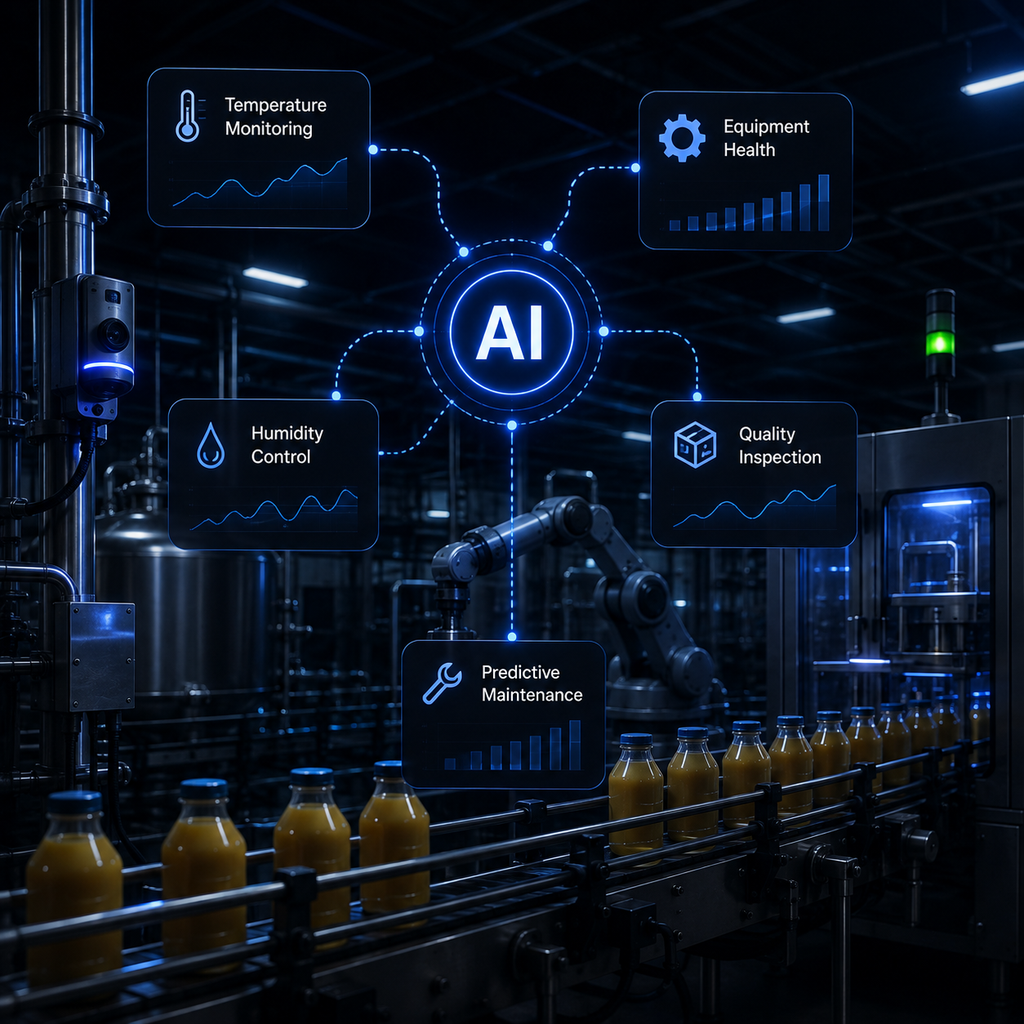
Logistics does not start at the loading dock; it starts on the factory floor. AI sensors for food and beverage manufacturing are now feeding real-time data directly into agentic systems, closing the loop between production and delivery.
Sensors track equipment vibration, temperature drift, and packaging line speed. When a sensor detects an anomaly, an AI agent does not just log it. It cross-references maintenance history, predicts the failure window, and automatically schedules a technician. This is what AI-driven maintenance analytics for F&B plants actually looks like in practice, and it prevents the kind of unplanned downtime that ripples straight into missed delivery windows.
The connection matters because a five-minute delay at the packaging line can cascade into a missed truck slot, which in turn leads to a missed delivery window and a lost retailer relationship. Agentic systems catch this chain reaction at the source instead of reacting to it downstream.
Tired of cold-chain spoilage and manual logistics firefighting?
Move from reactive tracking to autonomous execution with an enterprise agentic pipeline tailored to your existing ERP/WMS.
Book a Free AI Logistics Architecture Review with VectovateAI
Agentic AI in Logistics: Where It Delivers Value Today
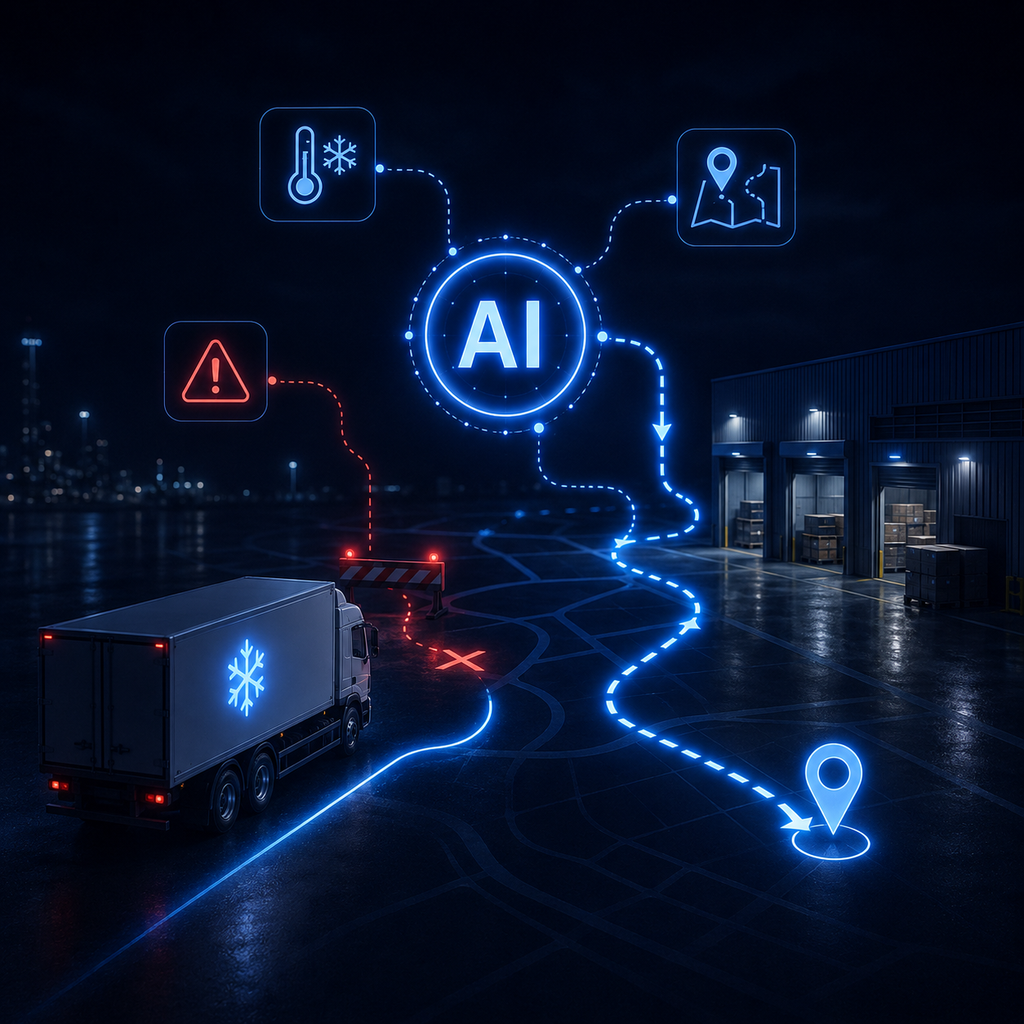
Enterprises are not waiting for a perfect system. They are deploying agentic AI in specific, high-friction areas first.
- Carrier follow-ups become continuous. Agents extract shipment updates from emails and documents in real time, rather than teams chasing down confirmations manually.
- Scheduling moves to the background. AI agents manage appointments and reschedules dynamically, cutting scheduling workload by 80 to 90% in early deployments.
- Delay detection becomes predictive. Instead of reporting a delay after it occurs, agents investigate the cause and take corrective actions before the disruption cascades.
- Exception management scales. Routine exceptions get handled autonomously. Only ambiguous or high-risk cases reach a human.
- Real-world results back this up. VectovateAI recently helped a logistics client cut operational costs by 60% by rebuilding their infrastructure around predictive analytics and agentic automation.
For F&B manufacturers, this means fewer missed delivery windows and far less time spent on manual data entry, which industry research pegs at roughly 15 hours per week per logistics professional.
AI in Food Service Industry and Fast Food: The Demand Side
Logistics does not stop at the warehouse. It ends at the counter. AI in food service industry operations, including quick-service restaurants, is now shaping how much inventory moves and when. This shift is part of a much larger pattern. Across procurement, production, and delivery, AI in food industry operations is moving from isolated pilots to connected, end-to-end systems that talk to each other in real time.
Menu velocity data (how fast an ingredient is adopted across menus) is feeding directly into demand forecasts. When an ingredient trend accelerates, agentic systems adjust procurement and delivery schedules before the demand spike hits.
AI in fast food industry operations specifically benefits from this speed. Quick-service chains run on razor-thin windows between ordering and fulfillment. Predictive demand sensing means fewer stockouts during a viral menu trend and less wasted inventory when demand cools off. This directly supports AI in the food industry’s goals around waste reduction and margin protection.
How to Stay Competitive in the Food Industry with AI?
Knowing the technology exists is not enough. Here is a practical way to think about how to stay competitive in the food industry with AI without overhauling your entire tech stack overnight.
- Start with one high-friction process. Exception handling or demand forecasting usually delivers the fastest, most measurable ROI.
- Layer agentic AI on top of existing systems. You do not need to replace your core TMS, WMS, or ERP (e.g., SAP, NetSuite, Manhattan Associates). Agentic platforms integrate cleanly using REST/GraphQL APIs, real-time webhooks, and event-driven data buses (like Kafka) to act as an autonomous execution layer.
- Build clean data foundations first. Agentic systems are only as good as the data feeding them. Siloed sales, sensor, and logistics data will limit results.
- Set guardrails before autonomy. Define which decisions an agent can make on its own and which ones still need human sign-off.
- Scale only after validating results. Nearly 40% of current agentic AI projects risk being scrapped by 2027 due to poor integration planning. Avoid becoming a statistic by proving value in one function before expanding.
Adoption barriers are real. According to the ORTEC survey, roughly 42% of organizations have not yet explored agentic AI, and 32% cite high integration costs as their biggest frustration. That gap is precisely the opportunity for manufacturers willing to move first.
The Bottom Line for 2026
AI in food supply chains is no longer a research topic. It is an operational necessity for any F&B brand trying to survive rising costs, thin margins, and unpredictable demand. The manufacturers who win in 2026 will be those who pair autonomous execution with human judgment, not the ones who wait for the technology to mature further.
That is exactly the approach we build around: agent-first systems with a human always in the loop, engineered with the kind of software discipline Ahmedabad’s engineering teams are known for. The goal is not to replace your logistics and plant teams. It is to remove the friction that keeps them from doing their best work.
Ready to move from manual firefighting to autonomous execution? VectovateAI builds agent-first, human-in-the-loop AI systems for food and beverage supply chains, engineered by senior architects out of Ahmedabad.
Leave a Reply